

Recently, the global professional audio market has shown a notable trend of technological integration, blurring the boundaries between home entertainment, live performance, and studio production equipment. Leading brands are successively launching solutions that balance high fidelity with flexibility, with collaborative innovation between line array speakers and digital amplifiers becoming an industry focal point.
In the professional performance sector, traditional stage speakers are undergoing system upgrades. Compact line array speakers featuring modular designs are gradually replacing some conventional stage speakers for small to medium-sized live events, thanks to their superior sound field coverage. Notably, these systems are now beginning to integrate into home ecosystems—for instance, a recently launched wireless line array speaker from one manufacturer supports connectivity with a Sonos sub, achieving a combination of professional-grade sound pressure and intelligent bass management.
Simultaneously, studio-standard monitor speaker technology continues to trickle down into consumer products. Several manufacturers are incorporating the transient response characteristics of professional monitor speakers into home audio products, pairing them with the latest generation of digital amplifiers. This combination not only accurately reproduces audio details but also uses built-in DSP chips to optimize frequency response in real-time. An industry analyst pointed out: "The high power conversion efficiency and intelligent protection features of digital amplifiers are solving stability pain points in multi-unit speaker systems during prolonged operation."
On the hardware design front, innovations in the materials for speaker exterior components are equally remarkable. Enclosures using mineral-filled polypropylene composites achieve a 30% weight reduction while maintaining structural strength, while metal grilles treated with nano-coatings effectively balance acoustic transparency with protection ratings. These advancements in speaker exterior components directly enhance the weather resistance and transport convenience of outdoor performance equipment.
Market data shows a 47% year-on-year increase in sales of digital amplifiers supporting Dirac Live room correction technology, indicating surging consumer demand for automatic acoustic calibration. A product manager from a leading brand revealed: "Our next-generation smart Sonos sub will, for the first time, feature multi-band dynamic EQ technology, addressing bass standing wave issues in home theaters through phase synchronization with line array speakers."
This cross-border convergence is reshaping the industry landscape: professional audio manufacturers are accelerating their expansion into the consumer market, while home audio brands are enhancing product competitiveness by adopting design philosophies from monitor speakers. With the maturation of UWB precise positioning and sound field modeling technologies, adaptive acoustic systems are expected to become widespread within the next three years, propelling the entire industry into the era of "intelligent soundscape customization."
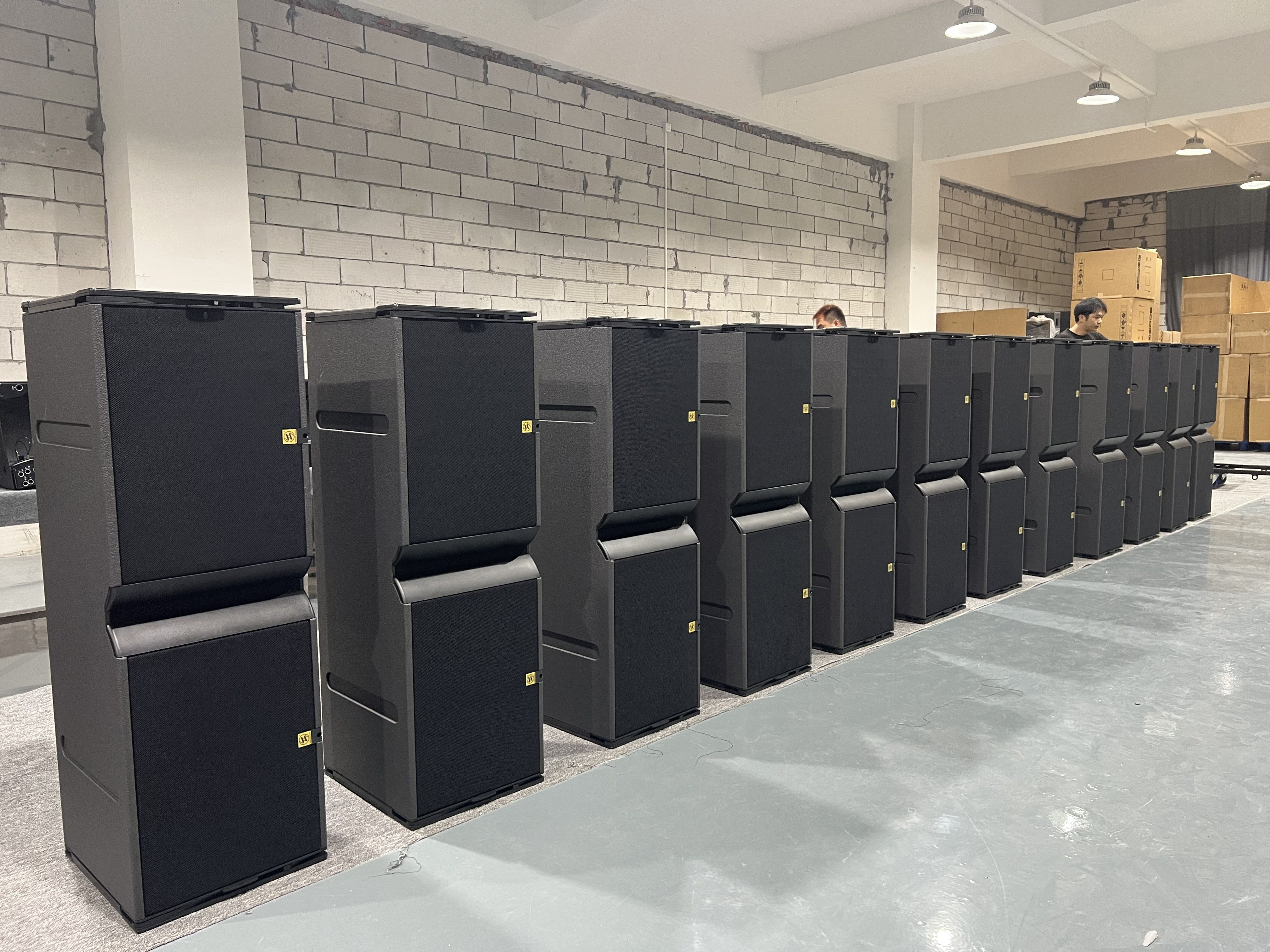
In the professional performance sector, traditional stage speakers are undergoing system upgrades. Compact line array speakers featuring modular designs are gradually replacing some conventional stage speakers for small to medium-sized live events, thanks to their superior sound field coverage. Notably, these systems are now beginning to integrate into home ecosystems—for instance, a recently launched wireless line array speaker from one manufacturer supports connectivity with a Sonos sub, achieving a combination of professional-grade sound pressure and intelligent bass management.
Simultaneously, studio-standard monitor speaker technology continues to trickle down into consumer products. Several manufacturers are incorporating the transient response characteristics of professional monitor speakers into home audio products, pairing them with the latest generation of digital amplifiers. This combination not only accurately reproduces audio details but also uses built-in DSP chips to optimize frequency response in real-time. An industry analyst pointed out: "The high power conversion efficiency and intelligent protection features of digital amplifiers are solving stability pain points in multi-unit speaker systems during prolonged operation."
On the hardware design front, innovations in the materials for speaker exterior components are equally remarkable. Enclosures using mineral-filled polypropylene composites achieve a 30% weight reduction while maintaining structural strength, while metal grilles treated with nano-coatings effectively balance acoustic transparency with protection ratings. These advancements in speaker exterior components directly enhance the weather resistance and transport convenience of outdoor performance equipment.
Market data shows a 47% year-on-year increase in sales of digital amplifiers supporting Dirac Live room correction technology, indicating surging consumer demand for automatic acoustic calibration. A product manager from a leading brand revealed: "Our next-generation smart Sonos sub will, for the first time, feature multi-band dynamic EQ technology, addressing bass standing wave issues in home theaters through phase synchronization with line array speakers."
This cross-border convergence is reshaping the industry landscape: professional audio manufacturers are accelerating their expansion into the consumer market, while home audio brands are enhancing product competitiveness by adopting design philosophies from monitor speakers. With the maturation of UWB precise positioning and sound field modeling technologies, adaptive acoustic systems are expected to become widespread within the next three years, propelling the entire industry into the era of "intelligent soundscape customization."